
Artificial Intelligence has transformed the entertainment industry at break neck speed which in turn has brought forth innovations we didn’t think we would see in our lifetime. Within this is what is very much a fascinating and very much a controversial issue which is the use of AI to bring back to life deceased actors for our screens. This is not just a technical feat we are seeing — we are presented with deep questions of ethics, consent, and the future of what we consider creative in film.
From feature films to digital experiments, we are seeing an increase in the use of AI in production. Some of this is in tribute to great performers of the past, but also we see this as crossing moral lines. Do we have here a ground breaking technology, or is it the beginning of an ethical crisis?
What is the practice of AI in recreating actors?
AI generated actors is a term for which we use advanced tech like machine learning, deepfake systems, and CGI to recreate an actor’s look, voice, and performance. Also it includes the use of these technologies to put living actors in films which for some reason are not present at the set.
In the case of Paul Walker in Furious 7 we see the use of visual effects and digital doubles to finish out his parts which by then he was no longer with us. Also in Rogue One we see the digital revival of Peter Cushing which in that case put to use performance which was given by the actor years after his death. These examples put forth that AI and visual effects are growing in their role to preserve film history at the same time they are what is breaking creative boundaries.
AI Reproduces Actors (Tech used).
AI based actor recreation is a field that uses many different advanced technologies which work in unison to produce real looking results:.
- Deepfake Technology: Synthetic Media:.
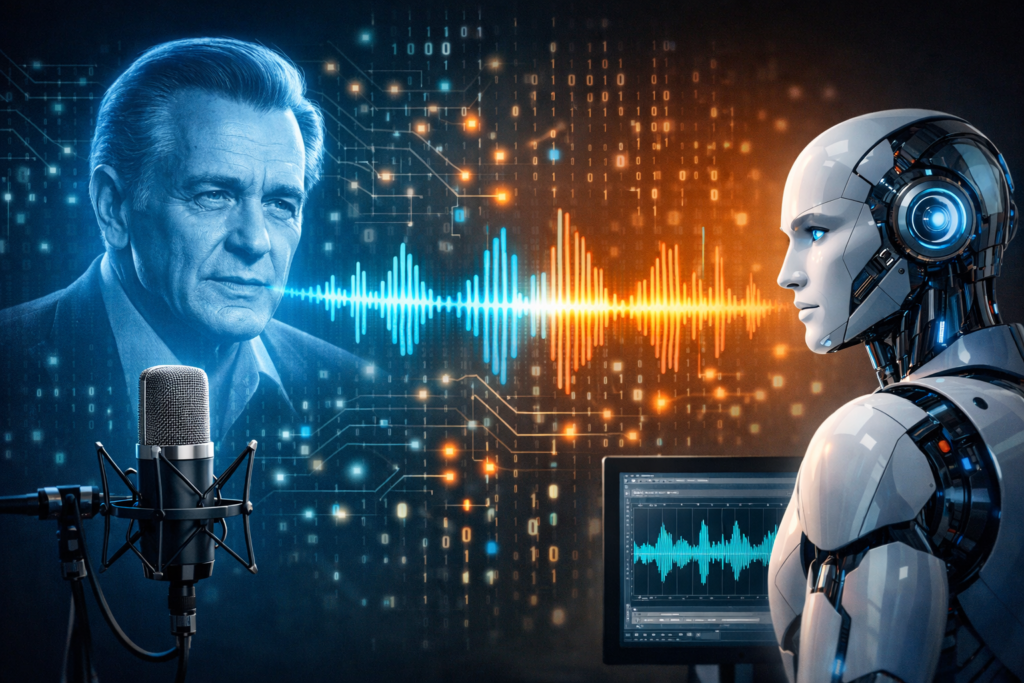
Deepfake technologies break down and study face structure, movement and expression in old content then create very real looking digital characters which replicate emotion.
- Machine Learning Models: AI Models:.
These models are on large sets of images, videos and audio recordings of the actor which in turn allow the AI to study and reproduce their unique features.
- CGI (Computer-Generated Imagery): 3D Computer Graphics:.
CGI improves the visual quality of AI generated characters which in turn make them fit naturally into real world settings.
- Motion Capture: Performance Capture:.
Real performers in motion capture suits act out the scenes which the AI then uses to map and put face onto their body movements to preserve realism.
- Voice Cloning: Speech Synthesis:.
AI generated voice models of actors’ voices which include tone, pitch and emotion which in turn makes the dialogue very authentic.
- Data Processing & Rendering: Data Management Display:.
Powerful computer systems which process all elements at once to produce a very realistic on screen performance.
Advantages of AI Replication.
AI’s role in bringing back actors we see it to play many roles which in turn benefit the film industry greatly. Of these benefits is the revival of great actors’ legacies which in large part is about paying homage to the greats and at the same time putting their art in today’s stories.
Another big pro is creative freedom. Directors are no longer bound to time, availability, and also that of death. They can see projects which were left incomplete or put a new spin on classic characters without at the same time altering the original vision.
Also in that regard we see that which AI does is to increase efficiency in terms of production time and budget. For instance instead of having to re-shoot scenes or replace actors, studios may use digital recreation to produce the result they want at a much faster rate.
Ethics Issues and Controversies.
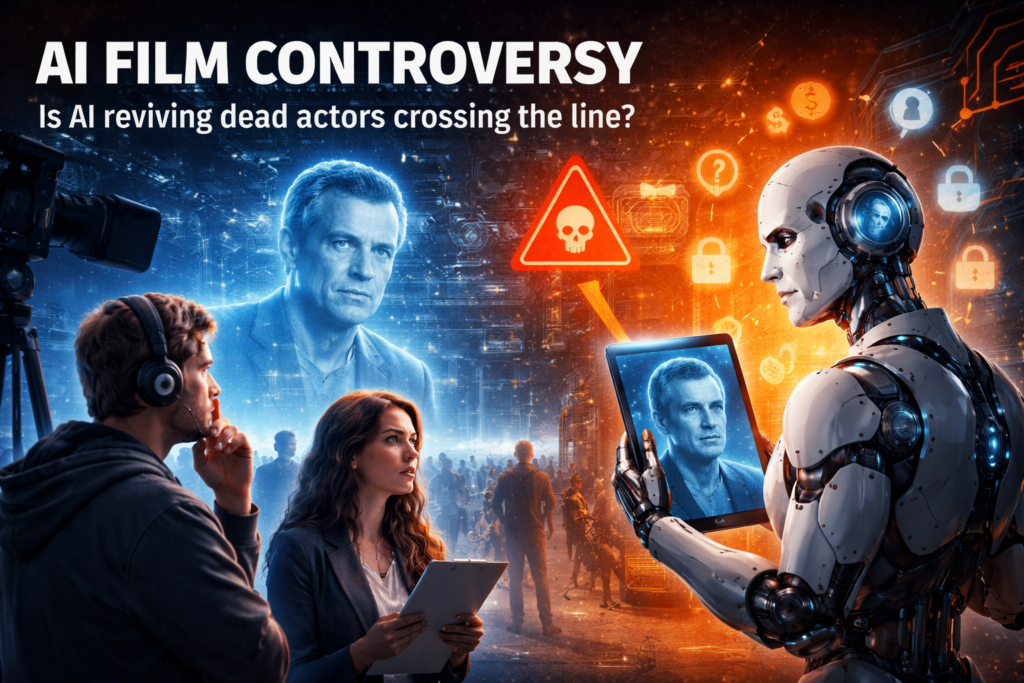
Despite the benefits, AI actor recreation puts forth great ethical issues. Of which consent is at the core. We see that dead actors do not give permission which in turn makes it a very tough issue as to whether or which of their images should be used at all even with family go ahead.
Also there is the issue of exploitation. Studios may put profit before respect which in turn sees us use an actor’s image in ways they may not agree with or see fit for their legacy. This also leads to misuse and over commercialization.
Another issue is the effect on live actors. If we see more AI generated performances the real actors’ opportunities may drop, which in turn will hurt newcomers in the field.
Finally, out of that is true authenticity. While AI may pass off visual and vocal replicas it is thought by many that it does not really put forth the emotional range and human subtlety which live actors bring to their roles.
Legal and Professional Response.
AI’s increasing role in entertainment has brought about a global response from legal and industry bodies. Film unions and which in turn are developing guidelines and protections for actors.
Contracts are at present including provisions for digital likeness which see actors put in charge of how their image is used even posthumously. Also it is reported that organizations like SAG-AFTRA are pushing for more stringent regulations which in turn will protect performers’ rights.
Governments are looking at new laws for digital identity and AI content as they attempt to create a fine line between growth in these fields and upholding ethical standards.
Viewer Point of View.
Audience response to AI generated actors is also mixed. We see some viewers that are into the nostalgia and emotional aspect of classic actors making a comeback. It is almost a tribute to their legacy.
Also some people are put off by it which in some cases includes a sense of disturbance which is present even when the recreation is very realistic. This which is known as the “uncanny valley” issue reports that we have a reaction of discomfort.
Transparency is key in this regard. If audiences are made aware of what the AI is doing and the reasons behind it they are more likely to accept it.
AI’s Role in the Future of Film.
The horizon for AI in film is bright but also full of challenges. As we see tech improve at an incredible rate AI will play a larger and more realistic role.
Also in the long term this trend’s success is to do with ethical frameworks, legal regulations, and audience trust. Filmmakers must find a balance between innovation and responsibility to which we may add that storytelling must remain respectful and meaningful.
Result of the discussion.
AI’s foray into the reproduction of deceased actors is a great case of tech transforming what we think is possible in terms of creativity. Although it presents great opportunities for innovation in story telling and conservation, it also brings up very important issues of consent, authenticity, and respect for what is left of the human past.
In the end which way it goes as a positive change or an ethical issue will be up to how the industry puts it to use.
Frequently Asked Questions.
Is it legal to bring back dead actors with AI?
Yes I am — but it is conditional on the estate’s permission and local laws which pertain to digital likenesses.
Do families see benefits in AI recreations?
In most of the cases the actor’s estate gets paid.
Can AI take over for human actors?
No, we have machines that can duplicate appearance and voice but in terms of emotion and creativity we are still far from what humans can do.
Why are some people at ease with AI actors?
In what is known as the uncanny valley where something appears real yet not quite natural.
What other applications does this technology have?
In addition to films it is used in gaming, advertising, virtual reality, and digital avatars.
Share this content: