
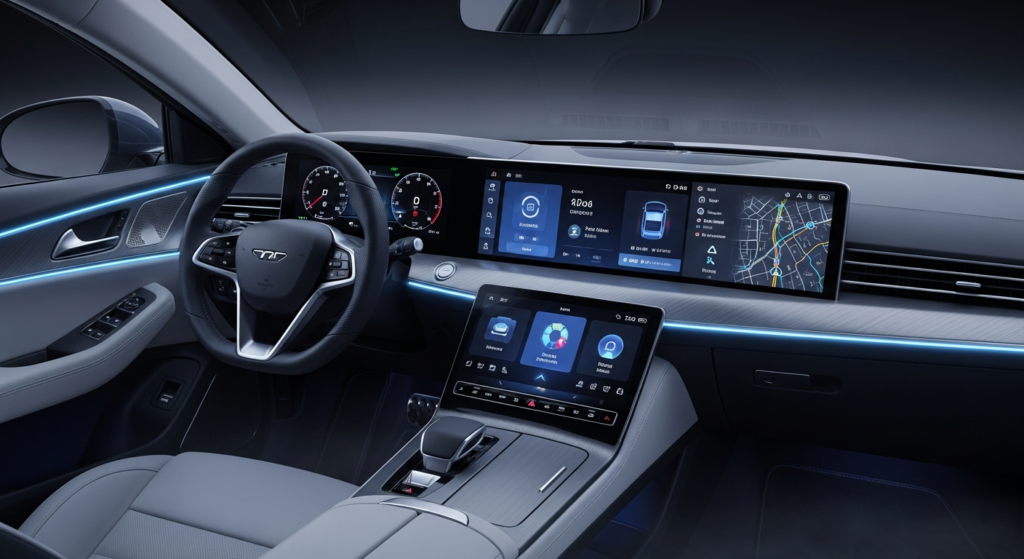

Carmobile manufacturing is quickly changing with cars becoming smart, software controlled machines. Software-Defined Vehicles (SDVs) are one of these changes whereby software is used to control the majority of the functions in the vehicle, allowing its continuous updates, better performance, and enhanced user experiences. The major manufacturers, such as Tesla and BMW, are taking the first steps in this transition, transforming cars into dynamic, upgradable platforms resembling smartphones.
What are Software-Defined Vehicles?
S.D.V. Software-Defined Vehicles are cars that are the current generation with software taking the central role in the operation of the car including engine performance, and infotainment systems. As opposed to the traditional vehicles where the fixed hardware plays a significant role in the functionality of the vehicle, SDVs enable the manufacturer to continuously add features despite the vehicle being sold.
The most important SDVs Characteristics.
Software-defined cars are designed based upon a scalable and dynamic digital platform. This allows easy updates and customization, facilitating an even more personalized and visionary driving experience. These vehicles would be geared towards continuous evolution, so as to be relevant in the long run.
The SDVs are changing the automotive industry in the following ways.
The emergence of SDVs is transforming the process of vehicle development, sale and experience. Manufacturers are moving to software-based models, rather than hardware-centered ones and establishing new sources of revenue and innovation.
Significant SDVs Changes.
- OTA updates enable vehicles to get better without going to the service.
- The feature-on-demand feature allows users to be able to unlock premium functionality at any time.
- State-of-the-art safety systems, using real-time data analysis.
- Personalization that is implemented through AI increases driver comfort and experience.
- Quick innovations cycles shorten time-to-market of new features.
Industry Effect and Development.
The change does not just stop at technology, but is also transforming the business models within the automotive industry. NVIDIA, as well as Volkswagen Group are investing heavily in software ecosystems, enabling companies such as NVIDIA to make high-performance computing in vehicles. Consequently, automotive is more than ever closer to the tech sector.
Basic Technologies of SDVs.
Centralized Vehicle Architecture
Conventional cars have numerous electronic control units, whereas SDVs have centralized functions that make operations easier and more efficient. This architecture enables various functions of a vehicle to interact with each other and this makes the performance and reliability of the vehicle to be improved.
High-Performance Computing
The current SDVs are equipped with powerful processors that handle multifaceted functions like real-time data processing, decision-making by AI, and sensor integration. Such systems are needed to allow autonomous driving and enhanced safety features.
Automotive Operating Systems
Special operating systems are custom-built to control vehicle operations, so hardware and software can be easily integrated. These systems can also enable developers to add new applications and services as time goes by.
Cybersecurity Systems
With increasing car interconnectedness, securing the car against cyber-attacks is becoming important. SDVs are equipped with advanced encryption and monitoring tools to guarantee the safety of the data and integrity of the system.
Benefits for Consumers
The benefits of software-defined vehicles are many and would make vehicles more convenient, safer, and more valuable to users. They introduce more humanized and futuristic driving experiences.
Consumer Advantages
- Customization of driving experience using AI.
- Less physical upgrades or service visits required.
- Better automobile life cycle because of constant changes.
- Get new features even without having to buy a new car.
- Increased safety by real time monitoring and updating.
Challenges and Concerns
Along with the benefits, SDVs have some issues, which must be resolved in order to be widely adopted.
Key Challenges
- Cybersecurity threats as a result of greater connectedness.
- Data privacy issues with regard to the collection of user information.
- Costly development and maintenance to manufacturers.
- Reliant on solid internet connectivity to features.
- Software integration and reliability.
Software-Defined Vehicles of the future.
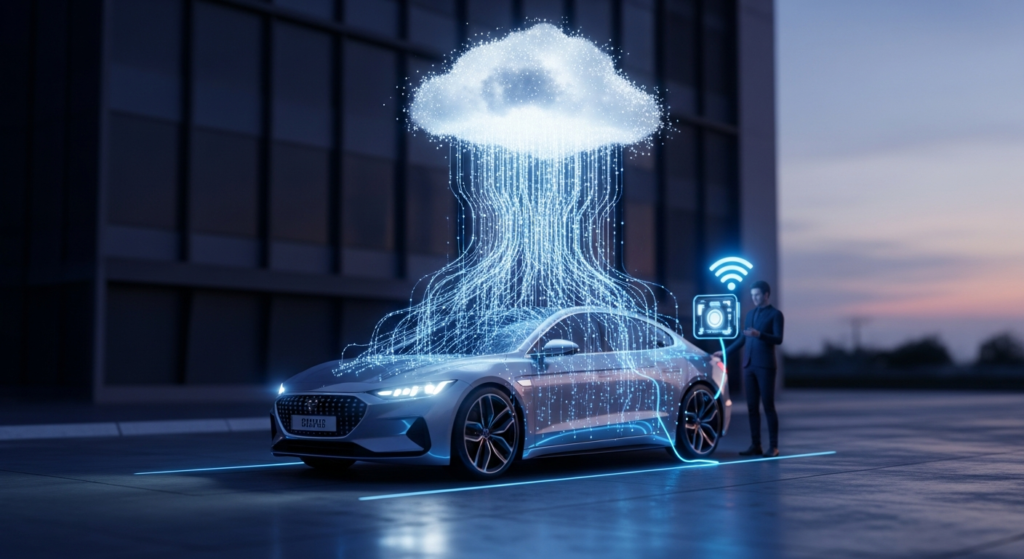
The future of SDVs is very bright since most automakers are still investing in digital transformation. Organisations such as General Motors are also keen on creating scalable software environments to facilitate long-term innovation.
Future Trends
- Increase in autonomous driving technologies.
- Connection to smart city infrastructure.
- Expansion of auto services on a subscription basis.
- More use of artificial intelligence in automobiles.
- On-going development of vehicle features after sale.
Conclusion
SDVs are transforming the automotive industry by making cars smart, upgradeable computers. SDVs are smarter and more personal with regular software updates, AI, and connectivity; therefore, providing a more intelligent driving experience. Cybersecurity and data privacy are still a challenge but with continuous developments, these challenges are likely to be resolved. As the industry keeps changing, SDVs will have a significant role to play in determining the future of mobility, which will fill the gap between automobiles and digital technology.
FAQs
1.A Software-Defined Vehicle (SDV) is a concept that is not well understood, as it is described in multiple ways by various terms.
A Software-Defined Vehicle is an automobile in which software manages most aspects, enabling it to be updated and have features added afterwards.
2. What are the OTA updates in SDVs?
Over the air updates involve the use of the internet in order to install new software, as does updating apps on a smartphone.
3. Do SDVs have any cybersecurity risk?
Although they have state of the art security systems, SDVs are not immune to cybersecurity issues that must be continually monitored and updated.
4. Is it possible to enhance functions in my SDV at any time?
Yes, lots of SDVs will enable users to update their software and buy/ unlock features on demand.
5. Do SDVs need to be connected to the internet all the time?
Many of the more advanced features require connectivity to be fully functional, not all the time.
Share this content: